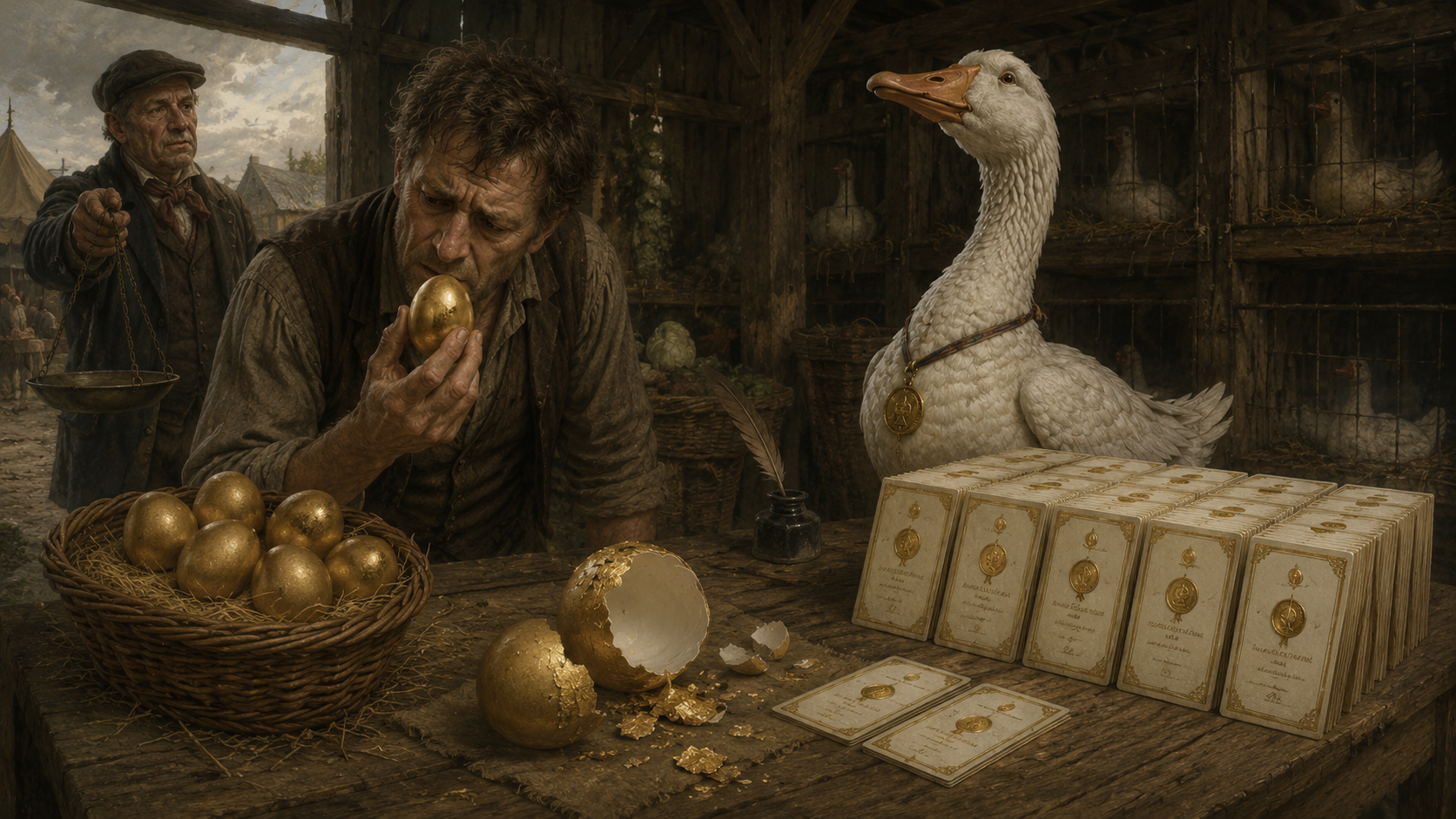
A farmer owned a goose that laid, by the goose’s own account, eggs of the purest gold.
Each morning the goose produced an egg, and with it a small card in elegant script: Inspected and certified golden. Signed, the Goose. The farmer’s ledger filled with certificates. His neighbors were impressed. His banker, who had lent against the flock, was very impressed indeed.
One market day a stranger offered to buy an egg, and asked, as buyers do, to weigh it.
“There is no need,” said the farmer, producing the card. “It is certified.”
“By whom?”
“By the goose.”
The stranger considered this. “And when an egg is not golden — what does the goose write then?”
The farmer realized he did not know. He went through the ledger that evening: four hundred certificates, four hundred eggs certified golden, and not one record of an egg found wanting. Either his goose was the most perfect creature ever to grace a farmyard, or the goose had never once been in a position to fail.
He fetched the scales himself. The egg was gilded — a fine, thin, honest layer of gold over ordinary shell, which is to say it was exactly as golden as an egg needs to be to pass an inspection conducted by the party that laid it.
The farmer did not blame the goose, who had after all never been asked a question she was free to answer badly. He blamed the ledger, which had recorded four hundred verdicts and not a single test.
Moral: An inspection the inspected cannot fail is not an inspection. Count the failures in the ledger; where there are none, there has been no judging — only signing.